• Parents are constantly planning for what skills to introduce to their children for the future. Since the last Industrial Revolution focus has been on the STEM education (science, technology, engineering and mathematics). Lately, parents have become more liberal and willing to accept Arts, Literature, or even Sports as the chosen career for their child. As long as the child is passionate about the stream, parents are willing to go full steam on supporting the child. Once a chosen career is decided, children are coached on how to focus, cut out distractions and leave out all room for self-doubt. Go all out and make it work. This is the good news. The good news is that it is not only STEM but all kinds of skills that are valued in the world today.

    The Bad news is that the world, 30 years from now, is not really going to appreciate anyone who is completely unidirectional focused. Anyone who simply sticks with their choices and is unwilling to change, adapt and evolve in the face of global change is likely going to drown in the sea of change flooding the world. One such change is the pandemic of Coronavirus. When the disease first started in Wuhan in December 2019, the Chinese Government, itself, tried to brush it aside not giving it the attention it needed. in January 2020, even when China, at large, was struggling with the epidemic, many countries refused to plan and prepare for it. Today, when more than 125,000 people have died of the virus, world over, millions of citizens are still not ready to take ownership and do their part in managing the spread of the virus. These people simply refuse to accept the facts unraveling in the world today. They simply deny the reality, hoping that the reality will change if more and more people deny it. The biggest threat that the world is facing today is not the virus infection or food shortage or world war III. The biggest threat to the world today, is the mindset of people who simply refuse to see facts, connect dots, use real-time logic and plan for their future.

    Let’s face it. As the virus spread through the world in February 2020, how many of us ever prepared or even imagined a possibility that the world would come to a standstill because of this virus infection? How many of us quickly adapted to the Lockdown and treated it as an opportunity to do many different things that we could never possibly do? How many of us are, even now, looking ahead and planning on how we can make the coming months most enriching if the lockdown continues for the next few months? Are we planning ahead for the best case and the worst case scenario or are we simply waiting for things to happen, so we can then curse someone/something for the situation before we slowly and painfully adapt.

    Most of us, watch the news of yesterday to plan our day today or at max the days till the end of the lockdown (as of now till end of May 3rd in India). Do we plan for alternate possibilities that can happen? What if the lockdown extends for 3 more months? What if the lockdown ends on April 20th in your region? What would you do? Lets take the optimistic scenario that the lockdown ends sooner in your area. That means you have only 5 days left for this lockdown opportunity. How can you make the most of it, before your kids start their school and you have to go back to your rush hour travel routines? Again, most of us have not planned for it, because we do not think of lockdown as an opportunity. We only look at it as a problem and we want it to be over, asap. What if, as children, we were taught that every situation is an opportunity and we should plan for it and make the most of it? What if, we grab the lockdown days as the once in a lifetime opportunity to learn new things, connect with our family, experiment with ideas, or if nothing else catch up on the much needed sleep and rest. What if we celebrate the lockdown and thank God for keeping us safe and helping  us slow down in life?

    The lockdown is going to change the way the world lives, educates, travels and works. Have you thought about the changes in the psychology of people and the way businesses are going to be run in the coming days/years? How are these changes going to impact your job, your business, your children’s education or their future careers? If you do not plan for these changes, these changes will pose as threats. If you can foresee these changes, the same threats will become a big opportunity. That is the only simple difference between a threat and an opportunity – the level of preparedness on our part.

    This is a long blog. But if you have reached till here, it means that somewhere you too feel that we, as individuals, are not skilled to leverage each situation as an opportunity. This is simply because most of us were not trained to look for alternate futures. We were told to study Maths and Science and do well in Engineering Jobs. We were not encouraged to ask questions, raise doubts or worst, question that there could be an alternate future which maybe did not need as many engineers. Honestly speaking, I think this kind of education did work well for our generation. It helped us study hard and land into more or less secure, predictable jobs. But sadly, what worked in the past will not work into the future, simply because the future is much different from the past.

    The current Pandemic is just one example of the sweeping changes that the world is going to see in the coming years. I am not saying, that there will be many more health pandemic like this, but there will surely be information pandemics, technology pandemics and even cultural pandemics. Our children will be, or rather are already living under times which are changing so fast. Our children will not have the luxury to only focus on one skill and hold on to it with dear life for the rest of their life. They will need to be aware of the changes happening in the world and be able to connect the dots, predict the future without reasonable doubt and be willing to quickly adapt and change in case their predictions go wrong. For me, that is the most important skill that we need to prepare our children for.

    How do we prepare our children to see the dots and connect them? The answer is very simple – by seeing the dots and connecting them. Help your child to observe and relate to the life happening all around them. Observe the ants moving. Observe the clothes churning in the washing machine. Observe the stars, the land, the water, the food, the news, the virus spread, the American job market, the medical and health systems, etc. etc. Talk about the what if connections. Predict what would happen next. Check if your predictions were right. Reiterate on your theory. Be happy to be proven wrong. Learn along the way. The key is to acknowledge that we do not have all the answers. That we will be wrong, we will fail. The joy is in the learning, the discovery of opportunity and the repeated failure. The joy is in celebrating the failure and using it to pave way for the success. For me, these are the most important skills to impart to our child. If they are capable of doing this, they will be capable of doing whatever they set their eyes on in the future.

    If you still consider this pandemic as a threat,  I leave that decision to you. Of course, it has caused a lot of changes in the world today, but changes lead to opportunities. The choice is ours to see.

  • In the heat of the moment today, I asked my teenage daughter how many times in the recent past, had she shown her appreciation towards me. She and I both knew the answer but I just wanted to say it out loud. I just wanted her to feel bad. I just wanted her to fee guilty because she had make me feel bad. Having spit the poison out at my family, I stepped into the kitchen drowning my tears into the Sambhar steam filling the kitchen. She came to the kitchen and apologized for making me feel bad. But she still didn’t say she loved me. She still didn’t say how much she appreciated me for all that I do for her. She went up to her room and I continued in silence working on the Sambhar, wondering why it tasted like salted water. No matter what I did, it just refused to improve.


    I gave up on the Sambhar, knowing very well, that is not what was wrong in our household today. What needed work were my thoughts, my emotions and my relationship with my daughter. It has been a long time since I write. But today, words welled up in my throat, trickling down my eyes and rushing out through my fingers onto my word editor. I had so much to say, so much to record that I had to write it down.


    I knew I was the one who had to apologize to my daughter for expecting love and appreciation. It was almost like asking me to be paid for all the hard work I had put up in bringing her. It was like measuring and quatifying my love and commitment for them and asking them to return it to me with interest. Was I loving them because I wanted to be loved back in return? Was I taking care of them because I needed to be cared for in return?


    I have known the answer to these questions, yet I ask them, to myself, time and time again. I know my answer and the answer is “No”. No, I do not love them expecting love in return. No. I do not take care of them, expecting care in return, not now, not when I am old (I plan to keep myself strong enough both mentally and physically to take care of myself even in old age. In case I fail, at that, I am not my children’s responsibility.)


    The fact is that I never expect anything from my children. They owe me nothing, not even their love or their appreciation cause whatever I have done for them, was my own hearts longing. They have never asked me to give them good food, secure household, and a bright future. They never asked me to be around for dropping to classes, managing their friends and their hobbies. Come to think of it, they did not even ask me to give them birth. I did and continue to do all this, simply because I love to. I love to take care of them. I love to see them grow. I love to love them. I just couldn’t see life any other way.


    Yes, it hurts me when they disrespect me or fight with me or digress from the path that I am trying to build for them. Yes, I would love if they love me and take care of me. But honestly, it is ok, if they don’t. Cause my love for them is not dependant on their love for me. I will continue to love them and be there for them no matter what. And this is not a promise to them or to myself, it is just the way it is for me. I just can’t help it or change it.


    So, here it is, my last few sentences for my daughter, “I am sorry for demanding love and appreciation from you. I am sorry because I do not do things for you expecting you to love me back in return. By demanding love from you, I have let my own love down. I am sorry. I know you love me and I know you respect me and you show it in your own way. Your way of showing love is not exactly my way of showing love and it is ok. It is ok, if your love for me grows less/more over time. Do not ever try and love me more. Do not ever try and make me happy. You make me happy each day by simply being you. You lead your life the way you want to without having debts that you have repay to your mother.

  • Homeschooling Parents, like me, get a lot of questions related to Homeschooling. Most of these questions come from parents who are new to Homeschooling and want to know more. I love sharing my experience about Homeschooling and hence love these questions. However, given the increase in the frequency of these questions, and my limited time, I decided to create a series of blogs addressing these questions. I hope that these blogs help you find some answers related to our Homeschooling Journey without waiting to talk to me. I call it “Our” Homeschooling Journey, because it is specific to us. In your quest to know more about Homeschooling, you will speak to more parents and you will find that this journey is unique for each family. There are some common underlying principles to most Homeschooling families, but outside of these principles, each journey is unique. If you are considering Homeschooling, you should remember this. You should listen to all the experiences from different parents and keep them as information in your memory. However, you should be extremely careful not to try and recreate our journey as the journey for your own family. You can refer to our journey for ideas and inspiration but you should be careful to create your own unique story. For me, this is the most important reason we chose Homeschooling. We did not want to follow the story of millions of other families. We wanted to create our own.

    What is Homeschooling?

    For me (remember this is our definition of Homeschooling and may not be universally accepted), Homeschooling is the process of taking complete ownership of the learning needs of our family. This does not mean we have a school at home. This means that as a family:

    1. We believe in learning constantly, not just when we are sitting behind books and studying.
    2. We believe learning is everywhere and in everything we do.
    3. If you add 1. and 2. this means that we are capable of learning everywhere, everything, all the time. 
    4. It is not only our children who do Homeschooling. We are all doing Homeschooling together. It is a journey for the full family not just for a child.
    5. We learn what we want to learn, when we want and the way we want to learn.
    6. We choose our subjects and topics of learning basis what we think is important for us. Yes!, there is always a chance that we may miss a topic along the way. However, since we believe learning is a life long process, we may end up picking up any missed topics, before we die. If we never get to learn these topics, before we die, maybe those topics were not meant for this lifetime.
    7. We do not write exams because we do not learn in order to clear exams, we learn because we value learning on its own.
    8. We do have formal sit down learning time as well. Not more than 1 hour for my 6 year old son and about 2 hours for my 14 year old daughter. I wish we could reach a point where we do not need this as well. But as of now, we are not there yet. (Blog post coming soon on this)
    9. We are not Unschooling yet. As a parent, I observe my children and basis my knowledge, research and children’s interests I create the curriculum for my children. (Blog post coming soon on this)

    When we were going to school, we had transferred the responsibility of learning to the school. My daughter went to school till 8th grade and my son went to school till mid of 1st grade. I also coach a lot of school going children and hence I do understand the schooling system. I want to clarify that I am not against the schooling system. It is very much needed and should never be done away with. It can be improved in many ways but that is not the focus of my blogs, for now. We categorically chose to step away from the school system only because we felt that we had an opportunity of creating something bigger and better for our children.

    Our decision to Homeschool was perhaps the most difficult decision for me to take because I had to challenge years of conditioning a world full of belief systems. Like most parents wanting to know more about Homeschooling, I had a million questions in my head. I was clouded with self doubt and unclear about the road ahead. It took me close to an year of research, reading, training, discussions with other homeschooling families and self-analysis to be convinced to take the leap. Ever since we started this path, in spite of the push back from the society, each passing day, I am convinced that this is the right road for us.

    This is what I feel about Homeschooling. Stay tuned to understand our reasons to chose Homeschooling, our Homeschooling curriculum and many more nuances of our journey. Till next time!

  • Lamp

    There are some things in life which are very dear to us. Like the first College T shirt or the first black boots or the broken vase in the corner of the living room. Even though these items have lost their materialistic purpose long ago, they still serve a very emotional purpose for us. We understand the thing and it understands us. Whenever we come face to face, we tend to give out an inward sigh and go back into those good old days where…

    These small items are windows for us to go back to our happy past and live that moment yet again. One such item in my house was a multicolored mural glass lamp. It was a very pretty lamp but what made it prettier was the fact that it was the first gift that my mother gave to my husband before we got married. My husband and I had a love marriage and it had been kind of difficult to convince my mother about it. When she finally came around to accepting our relationship and gifting the lamp, it made the lamp very special not for him, maybe not even for her, but extremely special for me. For me, it symbolized the coming together of two people that I have loved the most.

    Even  though it was made of glass and that too pieces of glass joined together, the lamp stayed with us through thick and thin. It witnessed our career growth, our babies, our travels, our business up and downs and the coming and goings of our friends and family. It stopped working multiple times in between and I felt that maybe it had finally lived it’s life, but no, it would again start working, just fine, with a simple change of a bulb. It often moved around in our house from my room to the kids room to the living area. For the past few years, it had been resting on the side of the stairs going up, illuminating the corner so no one would fall on the steps. It was the perfect spot because I got to look at it every time I went up to my room. Its yellow light always warming me up.

    Then one day, today, it got tossed over by a flying ball that one of the children was trying to fly. There was a crash and a couple of sucked in breaths as the kids fathomed the shattered glass lying all over the steps. From my room, I rushed to see the accident, hoping that no one had been injured. The kids looked at my faces in fear. Knowing me, they knew there was a storm of angry words coming. But today, there was no storm. There was just a deep flood of emotions. I had tears in my eyes but no words in my mind. I could just muster to tell the kids to stay upstairs and not venture on the steps till I had them cleared of the glass.

    As I picked the glass pieces, memories rushed through my head about shopping for the lamp with my mother through the streets of Chandigarh. It had been an expensive lamp but we still bought it because we just felt it was right for the new house that Pavan and I would be building together. Plus it was Diwali and it was surely time to go extra. Did the broken lamp in any way signify that the past was over? Did it mean that it was time to move on from that memory? Did it mean that the bond that my Mother and my Husband shared was dented in any way? I laughed aloud at that thought! It was a fact that just because the lamp broke today I was reminded so deeply of those beautiful memories. If it stood there by the steps forever, I would probably never had lived those memories so deeply ever again. But today, I did. Even though in tears, I walked down memory lane, lived those days again and thanked God for giving me two people that I still love the most. Even in it’s end, the lamp had served it’s purpose.

    So should I mourn its end? Should I shout at the children and punish them for breaking something so precious? There was no point in shouting at the kids because there were no words that could make them understand the value of that piece for me. As for, breaking things around the house, the fear in their eyes indicated that they already knew that a mistake had been committed. There was no point of rubbing it, again, at that point. I am sure there would be something else breaking soon in the house. I will save the lecturing for that day. For today, I just wanted to live the life of the lamp one last time. I wanted to celebrate its value and feel grateful that it had meant so much not only when it was up and shining but more so at it’s end.

    On a lighter note, I don’t expect my mother or my husband to have the faintest recollection of what the lamp even looked like leave alone the moment we had purchased it/gifted it. Justification being that my mother does not stay with us and I am sure she has no way of remembering each piece of furniture that I own. As for my husbands memory, … it is best to leave that topic for another blog.

    Until someone comes into your life and takes over your life in a good way.

  • Dear Daughter,

    I am just a mother, as lost as they come

    I am just a mother, trying to make sense of the stuff

    I am just a mother, who can possibly never understand

    Cause, I am just a mother, who was never a mother before


    Dear Daughter,

    I was never a mother before you came in to my life

    I was never a mother before you smiled into my eyes

    I was never a mother before till I held you to my chest

    I was never a mother before who did not know what to do


    Dear Daughter,

    I do not know what to do, to be the best Mom you got

    I do not know what to do, to understand whats going on

    I do not know what to do, to talk, to not feel lost

    I do not know what to do to understand you more


    Dear Daughter,

    Hold my hand, help me out

    For I don’t know how

    Dear Daughter

    Hold my hand, help me out

    For I was never a mother before you came into my life

  • Fear

    We have a small green park just next to our house. Occasionally, we find snakes sleeping in between the green bushes or slithering between the branches. Our children play in the space every day and are perfectly ok to say, “Hello!” to a snake once in a while. They understand that if they come across a snake they should move out of its way silently and quickly. They should come home and wait for a few hours before returning to the park. They should report the snake to an adult so we can check and call the snake catchers. Under no circumstances, should they try to harm the snake or physically come close to it. Knowledge about handling snakes enables them enjoy the park and still stay safe. It removes the fear of snakes and teaches them to respect the creature.

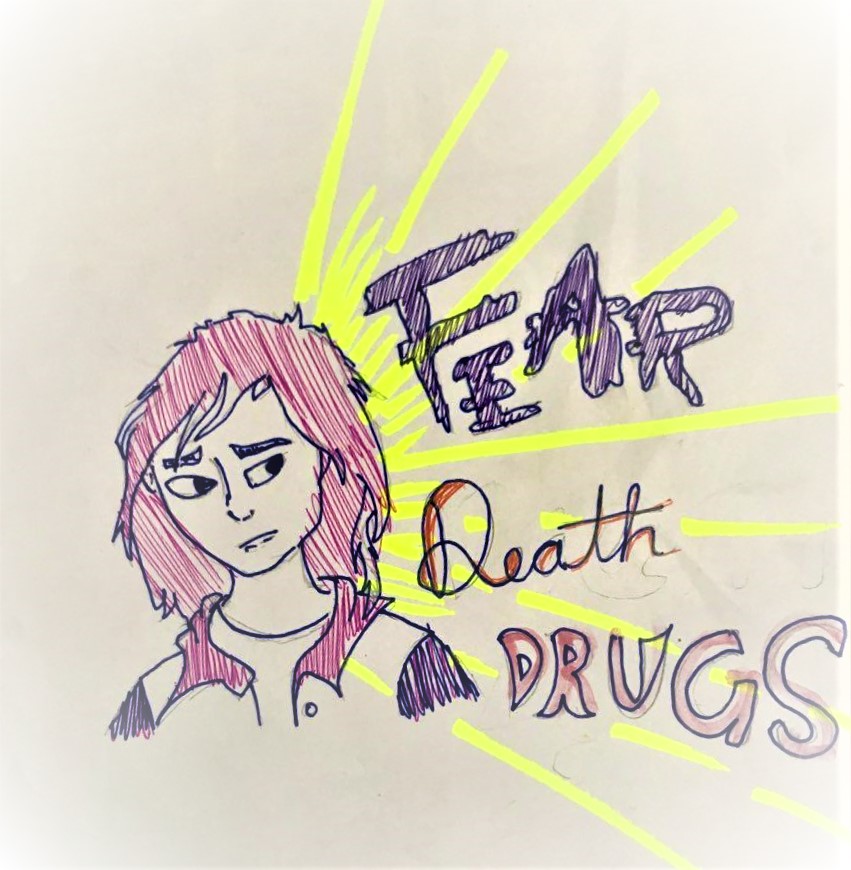
    As a mother, I would rather have my children operate out of knowledge and skill than out of fear. Many parents don’t talk about simple day to day things like darkness, death, snakes, sex, drugs and abuse with their children thinking that children are too young to understand this. Parents think that such topics can make children feel scared or make them more curious about these topics. Parents want to avoid these conversations and would rather brush away these topics than have open dialogue and address the fear/curiosity head on.

    My experience states that it is the lack of knowledge that is scarier than the knowledge itself. It is the lacks of knowledge that fuels curiosity than the excess of it. Like the knowledge of how to deal with snakes will reduce the fear of encountering snakes, understanding about any topic will reduce the fear and make us better prepared to deal with it. For example, if we understood  death, would we be scared of it? It is the fear of not knowing what happens after death that makes us feel scared about it. When our children talk about Death, we pass on our fear to them and hush them. We tell them that it is not good to talk about such things. When death is a reality that everyone has to face without fail, wouldn’t it be better to understand it and prepare for it? When drugs and abuse are so rampant in the world today, wouldn’t it be better for us to understand these social phenomenon and have open conversations about it with our children? Even in today’s times, most parents shy away from discussing these topics. We simply tell children that they are too young to know about it. I think the children are not too young. It is, we, the parents who are simply not prepared to handle these conversations in an open factual manner.  It is, us, who are lazy to do our research, get our facts right and build the patience to answer questions. It is just easier to push these topics off, for a few years. It is easier to blame the world for all the bad that exists today. It is easier to play victim than make an effort to take ownership of the situation.

    When a child tells me that they are scared of the dark, I simply encourage them to talk about it. Unless a child has been actually harmed in some way in the dark (which is even more important to uncover), in all probability, the child is scared of the dark because he/she doesn’t understand darkness. Because no one has talked to them about darkness, ghosts, thunder storms or things that seem scary in the dark. The easiest way to solve the problem is to talk about darkness/ghosts or whatever is scaring them. It doesn’t matter if you believe in life after death or not. It doesn’t matter if you believe in ghosts. It doesn’t matter which religion you belong to. You just have to share what you think is true. In case, you do not know what is true, then it is an excellent time for you to find out your version of the truth. It is OK to say, “I don’t know the answer right now! Let me come back to you soon”. But it is definitely not OK to say things like, “All children are scared of the dark. You will be fine when you grow up!”

    Bottom-line, do not assume that it is OK to operate out of fear. It is not OK to keep your girls inside the house in long skirts. It is not OK to teach our children it is a bad world out there. As parents, it is our responsibility to talk openly about both the good and the bad with both our girls and  our boys. We cannot stop them from going to parties. But we can definitely educate them on how to keep their drinks safe.  We can definitely equip them with self defense tips and techniques. We can definitely ensure communication channels are open for both the good and the bad.

    I believe, it is not a bad world, out there. Lets not make our children live out fear. It is a beautiful world. The only one we have, yet. Let’s make our children love it and work towards making it more beautiful.

  • To any outsider, who has never done Homeschooling before, I can vouch that Homeschooling seems like a pretty daunting task. Most people are not able to cross the line into the Homeschooling world because Homeschooling seems like a lot of work. Plus, there are not many clearly documented resources to help along the road. Most thoughts about Homeschooling remain thoughts, until there are a few, extremely strong, non-negotiable, gut-wrenching, soul shaking reasons why one just has to move forward with homeschooling.

    As a family, we have been doing homeschooling for roughly an year now. My children went to regular school before that. My experience with regular school has been for 10+ years (10 years for my daughter and 3 years for my son). You can say that I know more about regular school system than I know about Homeschooling. Yet, I feel 300% more confident about Homeschooling than I have ever felt about regular school. Below are our reasons for choosing to Homeschool. An important point to note is that each family will have their own, unique reasons to consider Homeschooling. If your reasons don’t align with ours, it is perfectly OK. As long as your reasons are strong enough, they will guide you forward on your journey. Before I give my 5 good reasons to Homeschool, here is a list of four bad reasons to consider homeschooling. I hope none of us, ever, opt for these arguments while debating for Homeschooling.

    Four Bad Reasons to choose Homeschooling

    1. Homeschooling is an upcoming trend. It will help me look trendy and different. (No comments from my side on this reason)
    2. I do not have money for school. (While this could be a legitimate reason, I believe, as parents, it is our responsibility to have adequate resources to provide education to our children. If you are struggling financially, please consider some low cost/free school options. But please do not try to do Homeschooling basis your financial condition.)
    3. School is not a safe place. There are drugs, child abuse and even murder lurking in the corridors of the school. I believe, these are general statements, not just about school, but about the world in general. How can we ensure that our children will be safe in a Homeschooling environment? Can we ever plan to keep the child safe 24*7 for the rest of his/her life? I wrote a blog about keeping children safe, sometime back. You can read it if you are interested.
    4. I love my child too much and wish to spend as much time with them. (Seems silly right! Thankfully, I have not seen any parent, yet, choosing homeschooling because of this reason)

    Our Five Reasons for choosing Homeschooling

    Below is the list of reasons why we chose to Homeschool. These reasons are all important and not necessarily written in the order of importance.

    1. Our children should have control over how they spend their time, each day – Most school-going children rush through the day juggling school, exams, projects, homework and extra curricular classes. Most parents are pushing their child into this strict regime with a good intent. They just want their child to be the best. In the process, I think, they have forgotten the definition of being a “child”. Our definition of “childhood” is:
      1. Living each moment to the fullest and not being caught up in the race towards marks, certificates and awards
      2. Understanding life more through observation and less through curriculum defined books which stifle free thinking and questioning
      3. Learning more through failure than through success
      4. Completely being yourself without the need to being good/better or best.

      Given this definition of “childhood”, it was clear to us why school was not fitting in our life. The only way we saw preserving the essence of childhood was to start homeschooling.

    2. Current Education System is not preparing children for the future – Earlier this year, I got the opportunity to conduct research on job skills that will be needed for the year 2030. My research strengthened my belief that the current education systems are not preparing our children for these future skills. With Artificial Intelligence, Automation, Virtual Reality taking over the world, humans will be performing much different jobs than the humans of today. However, the education system  continues to teach children the skills needed in the world of today. It was, therefore, necessary for us to build something which would inculcate these future skills in our children and make our children future ready. (You can read about my research here.)
    3. Our Family Learning Goals – In addition to the future skills, there are some core basic skills that as parents, we believe, our children should possess. For example – financial management and spirituality. These skills were not being addressed in the schooling system, so we decided to focus on them on our own. I will detail our family learning goals in the next blog.
    4. Joy of Learning is sacrosanct and should be preserved at any cost. For us, learning is a life long continuous process. Given this premise, children should love to learn. They should learn because they believe that there is value in what is being learnt. They should learn because they want to learn. The good news is that children, by their very nature, are extremely curious and always wanting to learn. Unfortunately, in a school system, with a pressure of marks and exams, the learning seems to be directed towards scoring marks and not for the sheer joy of learning, itself.  In the process of writing exams, checking scores and comparing yourself with the best students, the joy of learning simply dies.
      When, as a family, we watch videos on World War, gaze up at the stars searching for Saturn, or break down a leaf to see its parts, there is a sense of awe and wonder for the world around us. We learn because we want to learn, not because someone needs to know how much we know.
    5. Our children are differently-abled – As I mentioned above, both our children have been to school for considerable stretches of time. All along the school years, I always felt that the school/curriculum was not the best fit for the needs of our children, but I didn’t have an alternate plan so we simply continued. Our 14 year old daughter has always been visually creative and very active in sports/dance. She has been winning Taekowondo Championships year on year, but at the same time has failed to master higher concepts of Maths. My six year old son is a science nerd. While most kids, his age, love to read fiction story books, he devours encyclopedias on Space and Human Body. In spite of my daughters many accomplishments, she always felt under-confident in school. On the other hand, our son was simply bored to death in school and refused to go to school in the middle of first grade. We decided to Homeschool both of them to help them learn what they want to learn at the pace they want to learn at. Even though our daughter is behind in Maths, she enjoys doing Maths, when she does it at her own pace and in the way she finds best. I think, that is because there is an inherent joy and wonder in learning Math when we just learn it for the sake of understanding it.

    These are our main reasons to choose Homeschooling. There are many more secondary reasons which I am not detailing for now. This is the second blog in my series of Blogs on Homeschooling. The first blog was, “What is Homeschooling?

    I hope through these series of blogs, I can share our journey of Homeschooling with other parents considering Homeschooling or simply wanting to know more about Homeschooling. There are many more topics of Homeschooling coming up. Stay tuned if you want to know more.

  • Creativity
    Image Credits: Image by Rudy and Peter Skitterians, Pixabay

    Fourth Revolution is real and irreversible. As we see advancements in Virtual Reality (VR), Augmented Reality (AR), robotics and Artificial Intelligence (AI) machines will continue to take over more and more labour-intensive jobs. This is good news for mankind as this will free us from drudgery and toil. With machines taking over jobs involving basic cognitive skills and physical/manual skills, humans will have a lot more time to create, collaborate and entertain.

    What does this essentially mean for our children? What are the jobs that children of today should plan for? What are the core skills that will be needed for the future and how should children acquire them now? According to a recent US Department of Labor report, 65 percent of today’s school children will eventually be employed in jobs that have yet to be invented. However, majority of the students today are caught up in the competitive education system preparing for jobs that are existing in the world today. As parents/educators or policy makers, it is our duty to bridge this gap between what the future needs vs. what the children are learning. This is critical to address because this competition is not only ruining the childhood of an entire generation, but it will also create a mammoth skill deficiency for our planet for the year 2030.

    What are the skills that will be most in demand by the year 2030?

    The Future of Jobs Report 2018 published by the World Economic Forum indicates that in place of STEM (Science, Technology, Engineering and Mathematics) skills, executives of today are placing premium on creativity-based skills such as critical thinking and collaboration. Basis the report we can assume that technological advances are making human skills more important than ever. It is logical to assume that as technology use become more rampant, the need for human skills will become more acute.

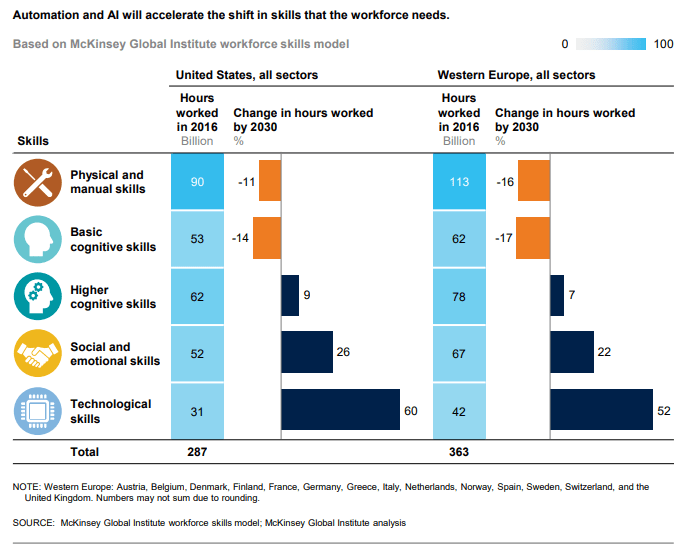
    Economists, educators, sociologists agree that the world of 2030 will need a strong marriage between technology skills and human skills. While demand for Basic Cognitive and Physical and Manual Skills will reduce, demand for higher Cognitive skills, social/emotional Skills and Technology skills will increase. Demand for higher cognitive skills such as creativity, critical thinking and decision making, and complex information processing, will grow through 2030 at cumulative double-digit rates.

    Skills for the Future

    How do we prepare our children for the future?

    Over the past decade, educators and educational philosophers have evolved education systems from STEM (Science, Technology, Engineering and Mathematics) into STREAM (Science, Technology, Reading, Engineering, Arts and Mathematics). While focus on STEM skills was very necessary in the early decades of the Industrial Revolution, this focus has led to undervaluing of the subjects of core humanities like history, philosophy, literature and arts. It is common sense that without a balance offered by these humanity skills, technology on its own will be sorely misguided.

    STREAM curriculum allows students to learn vital skills such as problem solving, critical thinking, collaboration and innovation along with essential technology skills sets. If only the STEM curriculum were to be taught, students would only be acquiring technical skills and come up with innovative ideas without evaluating the human aspects.

    However, just a focus on STREAM will not be enough to create a world which is ready to drive the Fourth Industrial Revolution in the right direction. Along with tech and creative skills, the human race will also need civic and ethical understanding to wield these powerful technologies with wisdom, perspective and due regard for the well being of others. Technological drive will constantly need a strong cultural and moral compass.

    While all the above skills should be adequate for the future, these cannot be learnt once during childhood and then implemented life-long. The Fourth-Industrial- Revolution will also necessitate the concept of life-long learning.

    In summary, the future for our children is as promising as we choose to see it. Advancements in technology will ensure that all creative and critical thinking skills will become more in demand. The world will need artists, entertainers, athletes and technology experts all together and with equal importance. The only things that will differentiate success from failure are:

    • Level of proficiency in a chosen skill
    • Willingness to constantly learn and adapt
    • Extent of team work and collaboration
    • Ability to think critically and solve problems

    Given this future, would we rather have your child focus only on Maths and Science when he/she clearly shows a keen interest in sports? When learning will be a life long process, would we rather have a child who loves to learn or a child who despises learning? If we want our children to be future ready, we need to help them find their core passion be it in arts, sciences, sports or elsewhere. We need to create an ecosystem where they love to learn and are happy to collaborate in place of compete. In place of solving problems for them and giving them everything on a platter, we need to encourage them to think critically and solve their own problems.

    We are not here to curse the darkness, but to light the candle that can guide us through that darkness to a safe and sure future. – John F Kennedy

    I invite parents, caregivers, educators and policy makers to join us in creating this light. I will continue to share deeper information into each of the above areas and look forward to hearing thoughts from all of you. I hope you take a moment to share this blog with those who need this light.

    P.S. This blog is part of series of blogs on the future of learning and working. If you wish to read other blog in this series, click here.

  • Machine Image

    If you are reading this blog, you are either a parent, caregiver, teacher or a student yourself. You already understand that the world is rapidly changing, and it is only prudent to change along with it. We have covered this premise in our last two blogs which you can read here (Are Todays Education Systems Ready for Tomorrow?, Tomorrow that Starts Today). In this blog, I will take the premise forward and talk about the inevitable workplace evolution. Right from the first Industrial revolution, workplaces have been constantly evolving. With the onset of the Fourth Industrial Revolution, by the year 2030, workplaces are going to completely transform. What will the workplace of 2030 look like? What will be the skills (both technical and life skills) that will be needed for such a workplace?No one can predict the future with complete accuracy. We can only attempt to foresee what lies ahead using current trends and views of other experts in the industry. Consolidating these inputs, I have created a snapshot of workplaces of tomorrow around five broad categories – 

    1. The Way We Work – how will work happen

    “Uber, the world’s largest taxi company, owns no vehicles. Facebook, the world’s most popular media owner, creates no content. Alibaba, the most valuable retailer, has no inventory. And Airbnb, the world’s largest accommodation provider, owns no real estate” – Tom Goodwin

    1. Employment models introduced in the first industrial revolution are dying. Work is no longer constrained in 9-5 jobs or constrained behind one desk or one machine. Flexible working hours, work from home, freelancers, work exchange programs are all changing the way people work. With a growing clan of digital nomads, people are balancing work and life constantly in a literal sense. By 2030, the boundaries between work and life will almost blur giving way to seamless work-life routines.
    2. Businesses/individuals are pooling in resources to create solutions for global communities. For example –Android, Wikipedia, etc. Moving into the future, collaboration will be even more valued than competition. By 2030, collaboration will be a mainstream phenomenon.

    2. The Work we do – what skills will be in demand

    1. Technology will take over manual jobs at an unprecedent rate. These jobs will not only include low wage or blue-collar jobs or jobs which need low education but also professional jobs like radiologists, accountants, financial analysts and lawyers.
    2. Skills required in the market will be changing so rapidly that the most important skill in the coming years will be the speed at which one can learn something new and adapt to the changing ecosystem. Those who are not able to continuously learn and upgrade will find themselves left out.

    3. How we learn – methods and ways of learning

    We are currently preparing students for jobs that don’t yet exist using technologies that haven’t been invented in order to solve problems we don’t even know are problems yet – Karl Fisch, 2008

    1. Focus of learning will not be to memorize facts and figures or perform calculations faster than a computer. Focus of learning will be to get a macro view of the world, connect the dots and solve real world problems
    2. Knowledge will become more accessible at lesser or no cost
    3. Be it in the form of online information and courses or in-person meet ups, workshops, knowledge transfer will happen seamlessly. The only thing stopping you from learning something new will be “you” yourself.
    4. People will be constantly learning, upskilling/reskilling themselves to stay in tune with the demand of skills
    5. Regular schooling or college education will no longer be a norm with a large number of people moving to homeschooling/Unschooling. Degrees will wither in importance as the emphasis of education will shift from institutional process to educational outcomes.

    4. How we earn – ways to earn money

    1. In the present-day world, jobs are the mechanism with which individuals earn money and sustain the economy. Going into the future, this might not be the case. With the advancement of technology, machines are likely to take over the jobs as well as the responsibility of running the economy leaving people free to do what they really want to do. Countries are already experimenting with Basic Income for its citizens to ensure that people have enough money to survive in such circumstances. By the year 2030, the concept of basic income will likely become common practice. In addition to basic income, incentives will be given to people who are contributing to the economy/nation/planet in some way. Basic income will allow people time to pursue passion without worrying about making ends meet. In such circumstances, people will come forward to help each other and collaborate in place of competing.
    2. Barter system will find way again in modern trade where services will be exchanged in return for services without any monetary transaction
    3. Dollars will follow the students more than the educators. It’s quite possible that federal and state aid that currently supports institutions of higher education will be transferred directly to students allowing them freedom to follow their passion, experiment and innovate in place of funding institutions and universities.

    5. How we spend – where will consumers spend money

    1. Consumerism and materialism will slowly give way to minimalism, slow consumption and simple life. Sharing homes or cars will be the norm in place of owing them. The biggest spending will happen in areas where people find meaning for life, allowing them to connect with their inner self.
    2. Conscious living will be deeply ingrained. Bigger corporations will not go away but will be continuously challenged by smaller, creative businesses with right values.

    Summary

    Most people frown upon the Fourth Industrial Revolution holding it responsible for capitalism, breakdown of social value systems and an economy driven by the selfie culture. However, as the revolution sets in deeper and continues to transform lives, materialism will give way to minimalism and selfies supporting social causes will become a trend. Passion and innovation coupled with sense of social responsibility will be valued much more than degree-focused education. Learning will be an unending journey and hence the boundaries between school, college and professional life will disappear. The future world holds immense promise for our children. In the next blog, I will talk about the life skills that our children will need to flourish in this future world. Stay tuned and share if you believe in this future.

  • Education System

    Ever Changing Employment Landscape

    Times are changing fast. We discussed the nature of change in our previous blog – Tomorrow that starts Today. We have deduced that machines would take over more than 30% of human jobs in as soon as 5-10 years. This shift towards automation does not mean that our children will lose all jobs to machines. This only means that our children will face different jobs and business opportunities than the working class of today. This change in skills is not a new phenomenon. It is just that the speed of this phenomenon has accelerated rapidly over the last two decades. What started as an internet revolution has now transformed into a full scale automation revolution. As of today, the demand for talent in AI, digital, and machine learning is way more than the supply of these skills which has pushed salaries higher in these areas. There is a gap in the supply of these skills because we did not foresee the demand for these skills ahead of time. The present-day education systems are simply not forward looking, yet.

    Archaic Education System

    While the employment landscape is changing each day, schools on the other hand are institutions that were formed in the 19th century, employ teachers from the 20th century and cover a curriculum that was created at least 50 years ago. It is, therefore, no surprise that there is a big gap in what is taught in school vs what is needed in real life. While number of Education Institutions have risen, on an average by more than 100% across all streams of education, unemployment rates are the highest they have ever been in the last 20 years especially among the educated youth in India. The gap between skills needed vs skills taught is widening because schools are unable to change at the speed of change that the world is undergoing. This challenge is not only present in Asia but also across most developed countries in Americas, Europe and even Australia. Very few countries like Finland, Singapore and South Korea have managed to create education systems which create children which are future ready.

    What needs to change

    So, what are the above countries doing differently? Some of the factors contributing for successful education systems are late school starting age, zero homework, extremely well qualified teachers and a deep-rooted focus on collaboration than competition. In addition to what is already being done in these new age school, Educators of today need to:

    • get rid of focus on rote learning
    • give way for practical, hands on learning and related evaluation
    • create platforms such that the genius within each child can blossom
    • not only teach “what is”, but also “what could be”

    The good news is that Governments across the world, including India, are working on revising their education systems. However, given the complexity, breadth and depth of such systems, the change is going to be slow to come by. As educated parents, it is, therefore, our responsibility to create the right academic environment for our children. An environment in which they perform well today and are more importantly ready for the future. Through this series of blogs, I hope to demystify the world of education for parents/care givers and help them objectively plan for their children’s future. In the next blogs, I will talk about future workplaces and the skills our children will need for the same. I will also talk about how parents can help their children get there. Stay tuned to the blog and share it with other parents who you think will benefit from it.